
Update: PST Expansion to Professional Services Has Been Postponed Until Further Notice
Information and Resources on the new Requirement to Charge PST on Select Professional Services
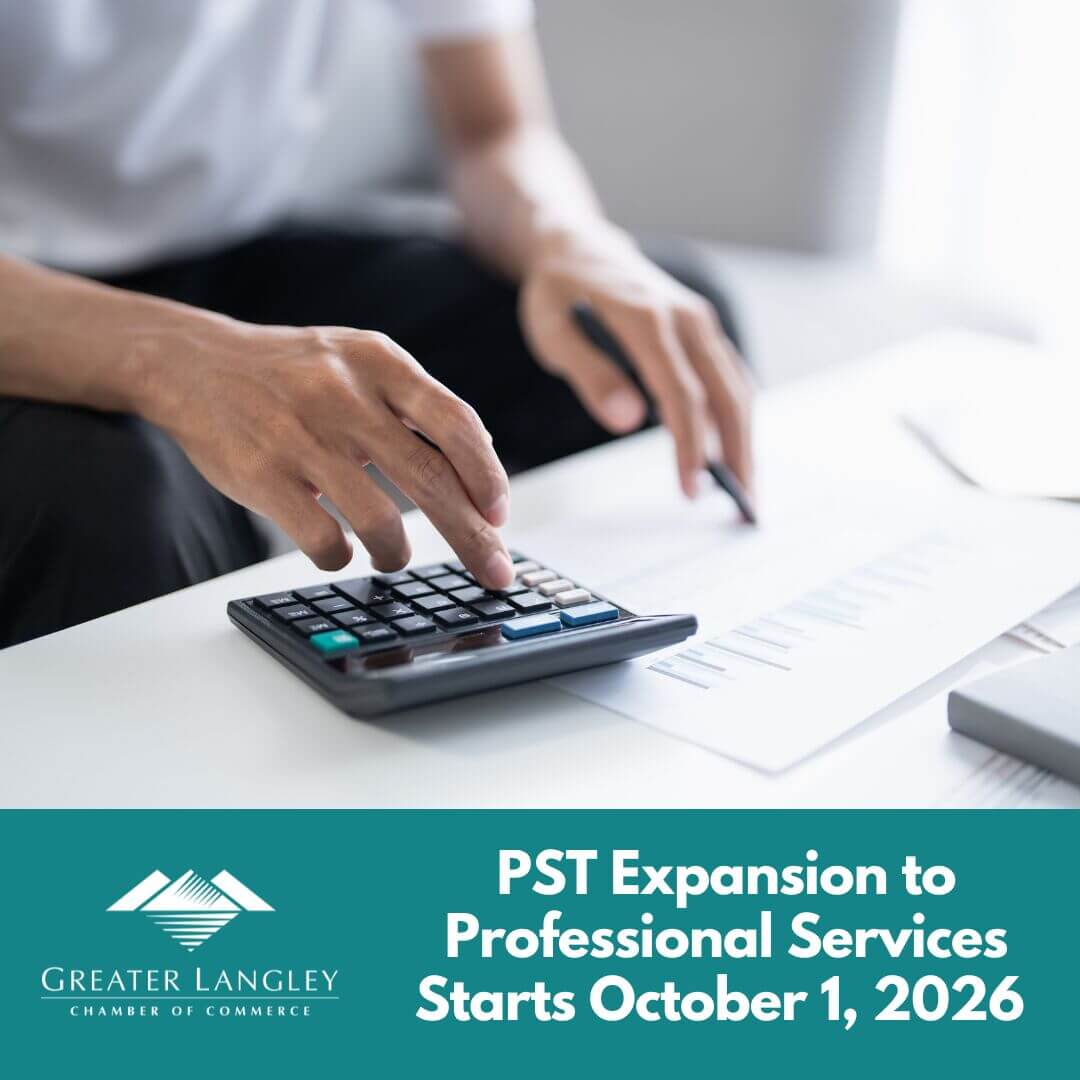
The Province of BC has announced a significant change in Budget 2026 that will expand the Provincial Sales Tax (PST) to a range of professional services, effective October 1, 2026.
As of October 1, 2026, PST (7%) will apply to the following services:
- Accounting (including bookkeeping and assurance)
- Architectural services
- Engineering and geoscience services
- Security services (including private investigation, alarms and guards)
- Non-residential real estate services (including commercial trading, rental property management, and strata management)
For architectural, engineering, and geoscience services, PST will only apply to 30% of the total service fee.
What This Means for Businesses
If your business provides any of these services:
- You will be required to charge and collect PST starting October 1, 2026
- You must register for PST if you are not already registered
- Registration can begin as early as April 1, 2026 -- but businesses should consider waiting until the final regulations and exemptions are released, which is expected this summer, potentially June or July.
For many professional service providers, this introduces new administrative requirements, alongside increased costs for their clients.
If you use any of these services, expect 7% PST to be charged on your bill as of October 1, 2026.
What to Do Next
- Review your contracts
- PST applies based on when services are performed, not necessarily when invoiced, so ensure you are billing correctly as October 1st approaches.
- Model the cost impact
- Estimate what the new costs mean for your bottom line before October 1. For businesses relying heavily on accounting, engineering, or security services, the annual impact can add up quickly
- Make your voice heard
- Share how this affects your business with the Langley Chamber. Member feedback directly informs our advocacy and ongoing engagement with government on this issue. Contact us >
- Register to Collect the PST
- If you provide these newly-taxable services, begin preparing to register for PST.
- Registration can happen as early as April 1, 2026, six months before the changes take effect - but businesses should consider waiting until the final regulations and exemptions are released, which is expected this summer, potentially June or July.
- Your registration can take up to 21 business days to be processed.
- Final rules and exemptions may still develop as the law and regulations are passed by the government.
- PST registration can be done online. Click here for more info >
Key PST Info: Register, Collect, Remit
Read this PST bulletin on how to register and who must register to collect and remit PST. Bulletin >
To complete your online registration, you'll need the following information:
- Your federal business number (BN), if you have one – if you do not have one yet, this process will create one for you
- If you're registering as a sole proprietor, your BC driver's licence number, BC ID number, or a copy of your passport or other government-issued identification
- If you're registering as a partnership:
- The BC driver's licence number or BC ID number for each partner, and
- A copy of your partnership agreement, if you have one
- Your incorporation number, if your business is incorporated (Note: if your business is not incorporated in B.C., you'll need to attach your Certificate of Incorporation)
- The amount of your total annual national (Canadian) sales, or the estimated amount if you've been in business less than 12 months
- The amount of your anticipated monthly taxable sales/leases
- If you're purchasing an existing business or leasing taxable assets, you'll need your purchase agreement or lease agreement (ensure the agreement identifies the purchase or lease of any assets)
- Your management or third party operating agreement (if you do not own the business and are only responsible for management or operations)
If you're the owner of a business with multiple locations, you'll need to decide if you want to register all your locations under one PST account or under separate PST accounts.
If you register all your locations under one account, you'll have one PST registration number that covers all your locations and you'll file one PST return each reporting period.
If you register your locations separately, you'll have multiple PST registration numbers and you'll file multiple PST returns each reporting period – one for every location you register.
For when accounting services are provided that relate to BC and another jurisdiction, you can claim exemption from paying PST on the portion of the purchase price for the accounting services that relates to a jurisdiction outside B.C.
For example, a national chain store purchases accounting services outside B.C. and the services relate to a matter that affects all its stores across Canada. Because half of the chain's stores are in B.C., the chain reasonably estimates that the services relate half to B.C. and half to the rest of Canada. The chain claims exemption on 50% of the total purchase price and pays PST on the 50% portion of the purchase price that relates to its stores in B.C.
Transitional rules – Services purchased or provided before October 1, 2026
If consideration for accounting services is paid or becomes due before October 1, 2026, and the services are provided entirely before December 1, 2026, PST does not apply to the consideration. However, if any portion of those services is provided on or after December 1, 2026, PST applies to any consideration attributable to the services provided on or after October 1, 2026.
Example 1 – Services for October and November 2026, billed in September
If on September 15, 2026, you bill for accounting services for October and November 2026, no PST is due on those two months of services. You do not charge PST on the sale, and your client does not owe PST.
Example 2 – Services for October to December 2026, billed in September
If on September 15, 2026, you bill for accounting services for October to December 2026, PST is due on any consideration for the services that are provided on and after October 1, 2026.
If at the time of the sale you're already registered to collect and remit PST, we recommend you charge and collect the PST. If you do not, your client must self-assess (pay directly to us) the PST due as follows:
- If they have a PST number, by using their PST return for the reporting period that includes October 2026
- If they do not have a PST number, by completing a Casual Remittance Return (FIN 405) (PDF, 260KB) due by November 30, 2026 (i.e. on or before the last day of the month following October, when the services became taxable)
Example 3 – Long-term contract for services, billed monthly
You have a contract with a client to provide them with a year of accounting services, beginning January 1, 2026. You bill for the next month's services on the 15th of each month. When you issue a bill on September 15, 2026, for October 2026 services, you do not charge PST on the October services, and your client does not owe PST.
You must charge and collect PST on monthly bills you issue as of October 1, 2026. When you issue a bill on October 15, 2026, for November 2026 services, you must charge and collect PST.
Example 4 – Services for September 2026, billed in October
You provide accounting services to a client in September 2026. You bill for the services on October 1, 2026. You must charge and collect PST on the sale. When consideration for accounting services is paid or becomes due on or after October 1, 2026, you must charge and collect PST, regardless of when you provided the services.
Effective October 1, 2026, PST applies at the rate of 7% on the amount equal to 30% of the purchase price of taxable architectural services. For example, if you sell $100,000 of taxable architectural services, you must charge and collect $2,100 in PST (7% × $30,000). If only a portion of the architectural services is taxable, 7% PST applies to 30% of the purchase price of the taxable portion.
The purchase price includes disbursements, which are part of the purchase price of architectural services. More details will come with the PST regulations that are still expected.
If consideration for architectural services is paid or becomes due before October 1, 2026, and the services are provided entirely before December 1, 2026, PST does not apply to the consideration. However, if any portion of those services is provided on or after December 1, 2026, PST applies to any consideration attributable to the services provided on or after October 1, 2026.
Example 1 – Services for October and November 2026, billed in September
If on September 15, 2026, you bill for architectural services for October and November 2026, no PST is due on those two months of services. You do not charge PST on the sale, and your client does not owe PST.
Example 2 – Services for October to December 2026, billed in September
If on September 15, 2026, you bill for architectural services for October to December 2026, PST is due on any consideration for the services that are provided on and after October 1, 2026.
If at the time of the sale you're already registered to collect and remit PST, we recommend you charge and collect the PST. If you do not, your client must self-assess (pay directly to us) the PST due as follows:
- If they have a PST number, by using their PST return for the reporting period that includes October 2026
- If they do not have a PST number, by completing a Casual Remittance Return (FIN 405) (PDF, 260KB) due by November 30, 2026 (i.e. on or before the last day of the month following October, when the services became taxable)
Example 3 – Long-term contract for services, billed monthly
You have a contract with a client to provide them with a year of architectural services for a project, beginning January 1, 2026. You bill for the next month's services on the 15th of each month. When you issue a bill on September 15, 2026, for October 2026 services, you do not charge PST on the October services, and your client does not owe PST.
You must charge and collect PST on monthly bills you issue as of October 1, 2026. When you issue a bill on October 15, 2026, for November 2026 services, you must charge and collect PST.
Example 4 – Services for September 2026, billed in October
You provide architectural services to a client in September 2026. You bill for the services on October 1, 2026. You must charge and collect PST on the sale. When consideration for architectural services is paid or becomes due on or after October 1, 2026, you must charge and collect PST, regardless of when you provided the services.
Effective October 1, 2026, PST applies at the rate of 7% on the amount equal to 30% of the purchase price of taxable engineering or geoscience services. For example, if you sell $100,000 of taxable engineering or geoscience services, you must charge and collect $2,100 in PST (7% × $30,000). If only a portion of the engineering or geoscience services is taxable, 7% PST applies to 30% of the purchase price of the taxable portion.
The purchase price includes disbursements, and more details on disbursements will come in the final PST regulations.
For work done on projects that straddle BC and another jurisdiction, you can claim exemption from paying PST on the portion of the purchase price for the services that relates to a jurisdiction outside B.C. The PST is then paid on 30% of the portion of the purchase price that relates to B.C.
For example, a business purchases engineering services outside B.C. that relate to a highway infrastructure project that is located 60% in B.C. and 40% in Alberta. The business reasonably estimates that the services relate 60% to B.C. and 40% to Alberta. The business claims exemption on 40% of the total purchase price and pays PST on 30% of the 60% portion of the purchase price that relates to the projects in B.C.
If consideration for engineering or geoscience services is paid or becomes due before October 1, 2026, and the services are provided entirely before December 1, 2026, PST does not apply to the consideration. However, if any portion of those services is provided on or after December 1, 2026, PST applies to any consideration attributable to the services provided on or after October 1, 2026.
Example 1 – Services for October and November 2026, billed in September
If on September 15, 2026, you bill for engineering services for October and November 2026, no PST is due on those two months of services. You do not charge PST on the sale, and your client does not owe PST.
Example 2 – Services for October to December 2026, billed in September
If on September 15, 2026, you bill for engineering services for October to December 2026, PST is due on any consideration for the services that are provided on and after October 1, 2026.
If at the time of the sale you're already registered to collect and remit PST, we recommend you charge and collect the PST. If you do not, your client must self-assess (pay directly to us) the PST due as follows:
- If they have a PST number, by using their PST return for the reporting period that includes October 2026
- If they do not have a PST number, by completing a Casual Remittance Return (FIN 405) (PDF, 260KB) due by November 30, 2026 (i.e. on or before the last day of the month following October, when the services became taxable)
Example 3 – Long-term contract for services, billed monthly
You have a contract with a client to provide them with a year of engineering services for a project, beginning January 1, 2026. You bill for the next month's services on the 15th of each month. When you issue a bill on September 15, 2026, for October 2026 services, you do not charge PST on the October services, and your client does not owe PST.
You must charge and collect PST on monthly bills you issue as of October 1, 2026. When you issue a bill on October 15, 2026, for November 2026 services, you must charge and collect PST.
Example 4 – Services for September 2026, billed in October
You provide engineering services to a client in September 2026. You bill for the services on October 1, 2026. You must charge and collect PST on the sale. When consideration for engineering or geoscience services is paid or becomes due on or after October 1, 2026, you must charge and collect PST, regardless of when you provided the services.
For work done on projects that straddle BC and another jurisdiction, you can claim exemption from paying PST on the portion of the purchase price for the services that relates to a jurisdiction outside B.C.
For example, a national chain store purchases security consulting services outside B.C. The services relate to a matter that affects all its stores across Canada and are provided by a person who holds or is required to hold a security business licence for security consulting in B.C. Because 20% of the chain's stores are in B.C., the chain reasonably estimates that the services relate 20% to B.C. and 80% to the rest of Canada. The chain claims exemption on 80% of the total purchase price and pays PST on the 20% portion of the purchase price that relates to its stores in B.C.
If consideration for security services is paid or becomes due before October 1, 2026, and the services are provided entirely before December 1, 2026, PST does not apply to the consideration. However, if any portion of those services is provided on or after December 1, 2026, PST applies to any consideration attributable to the services provided on or after October 1, 2026.
Example 1 – Services for October and November 2026, billed in September
If on September 15, 2026, you bill for security services for October and November 2026, no PST is due on those two months of services. You do not charge PST on the sale, and your client does not owe PST.
Example 2 – Services for October to December 2026, billed in September
If on September 15, 2026, you bill for security services for October to December 2026, PST is due on any consideration for the services that are provided on and after October 1, 2026.
If at the time of the sale you're already registered to collect and remit PST, we recommend you charge and collect the PST. If you do not, your client must self-assess (pay directly to us) the PST due as follows:
- If they have a PST number, by using their PST return for the reporting period that includes October 2026
- If they do not have a PST number, by completing a Casual Remittance Return (FIN 405) (PDF, 260KB) due by November 30, 2026 (i.e. on or before the last day of the month following October, when the services became taxable)
Example 3 – Long-term contract for services, billed monthly
You have a contract with a client to provide them with a year of security services, beginning January 1, 2026. You bill for the next month's services on the 15th of each month. When you issue a bill on September 15, 2026, for October 2026 services, you do not charge PST on the October services, and your client does not owe PST.
You must charge and collect PST on monthly bills you issue as of October 1, 2026. When you issue a bill on October 15, 2026, for November 2026 services, you must charge and collect PST.
Example 4 – Services for September 2026, billed in October
You provide security services to a client in September 2026. You bill for the services on October 1, 2026. You must charge and collect PST on the sale. When consideration for security services is paid or becomes due on or after October 1, 2026, you must charge and collect PST, regardless of when you provided the services.
When dealing with properties across BC and other jurisdictions:
For work done in relation to property that includes both BC and another jurisdiction, you can claim exemption from paying PST on the portion of the purchase price for the services that relates to a jurisdiction outside B.C.
For example, a business purchases property management services for its industrial properties in both B.C. and Alberta from a property management brokerage licensed or required to be licensed in B.C. The business reasonably estimates that the services relate half to its properties in B.C. and half to its properties in Alberta. The business claims exemption on 50% of the total purchase price and pays PST on the 50% portion of the purchase price that relates to its properties in B.C.
When dealing with properties that are partially Class 1 or Class 3 residential:
If the non-residential real estate services are provided in relation to a property that's classified in part as Class 1 (Residential) or Class 3 (Supportive Housing), the purchase price does not include the portion that can reasonably be attributed to services provided in relation to the Class 1 or Class 3 part of the property.
For example, a business purchases strata management services for a property that's classified as 60% commercial and 40% residential, based on square footage. The business reasonably attributes 40% of the services to the residential part of the property. The business pays PST on the 60% portion of the services attributed to the commercial part of the property.
If consideration for non-residential real estate services is paid or becomes due before October 1, 2026, and the services are provided entirely before December 1, 2026, PST does not apply to the consideration. However, if any portion of those services is provided on or after December 1, 2026, PST applies to any consideration attributable to the services provided on or after October 1, 2026.
Example 1 – Services for October and November 2026, billed in September
If on September 15, 2026, you bill for non-residential property management services for October and November 2026, no PST is due on those two months of services. You do not charge PST on the sale, and your client does not owe PST.
Example 2 – Services for October to December 2026, billed in September
If on September 15, 2026, you bill for non-residential property management services for October to December 2026, PST is due on any consideration for the services that are provided on and after October 1, 2026.
If at the time of the sale you're already registered to collect and remit PST, we recommend you charge and collect the PST. If you do not, your client must self-assess (pay directly to us) the PST due as follows:
- If they have a PST number, by using their PST return for the reporting period that includes October 2026
- If they do not have a PST number, by completing a Casual Remittance Return (FIN 405) (PDF, 260KB) due by November 30, 2026 (i.e. on or before the last day of the month following October, when the services became taxable)
Example 3 – Long-term contract for services, billed monthly
You have a contract with a client to provide them with a year of non-residential property management services, beginning January 1, 2026. You bill for the next month's services on the 15th of each month. When you issue a bill on September 15, 2026, for October 2026 services, you do not charge PST on the October services, and your client does not owe PST.
You must charge and collect PST on monthly bills you issue as of October 1, 2026. When you issue a bill on October 15, 2026, for November 2026 services, you must charge and collect PST.
Example 4 – Services for September 2026, billed in October
You provide non-residential real estate services to a client in September 2026. You bill for the services on October 1, 2026. You must charge and collect PST on the sale. When consideration for non-residential real estate services is paid or becomes due on or after October 1, 2026, you must charge and collect PST, regardless of when you provided the services.
When you're ready to register to collect PST, you can register online. Online registration is accessible 24 hours a day, 7 days a week. You can register at any time that is convenient for you.
It takes approximately 15 to 25 minutes to complete the online registration process.
If the government approves your application, you'll be provided with a letter advising you of your PST number and your ongoing reporting periods for your PST returns.
Your PST number is 11 characters long and is in this format: PST-1234-5678.
Once your PST account is created, if you provided an email address during the registration process to access eTaxBC, you'll receive an email with an enrolment code.
If you're required to be registered to collect PST, you must charge and collect the tax when the tax is payable, unless a specific exemption applies to the sale or lease.
Generally, PST is payable when the purchase or lease price, or any portion of the purchase or lease price, is paid or becomes due, whichever is earlier.
PST becomes due the earliest of:
- The day you first issue the invoice for the sale or lease
- The date on the invoice
- The day you would have, but for undue delay, issued the invoice
- The day the purchaser or lessee must pay the purchase or lease price under a written agreement
You must report and pay (remit) to the government all PST you have charged, whether or not you've actually collected it from your customer.
All PST you charge within a reporting period must be remitted to us no later than the last day of the month following the reporting period.
Reporting and paying tax means filing a tax return and paying the government the tax you charged on your sales and PST you owe on the purchases you made to run your business.
You must report and pay to to the government all PST you have charged, whether or not you have actually collected it from your customer yet.
Your completed tax return and payment must be received on or before the last day of the month following the end of the reporting period.
If you are registered for PST and report and pay on time, you are entitled to receive a commission of up to $198 per reporting period. The amount of commission you're entitled to is calculated on your PST return.
Why the Langley Chamber Opposes This Change
The Langley Chamber is hearing directly from members that this change will increase the cost of doing business at a time when many are already under pressure.
The core issue is how PST works. Unlike GST or HST systems in other provinces, PST is not recoverable by businesses. That means every time PST is applied to a service, it becomes a permanent cost — not something that can be claimed back.
As a result, costs compound across the economy. Businesses rely on professional services like accounting, engineering, and property management to operate. Applying PST to these essential inputs means:
- Higher operating costs
- Reduced margins
- Increased prices passed on to customers
We have raised these concerns directly with the Province and are contacting the Minister to call for a reconsideration of this measure. Our concern is not only the immediate impact, but what this signals moving forward.
This risks becoming a canary in the coal mine — setting the stage for further expansions of PST or new taxes on business inputs in the future.
